BusinessBhumika Lenka19 Jun 2026
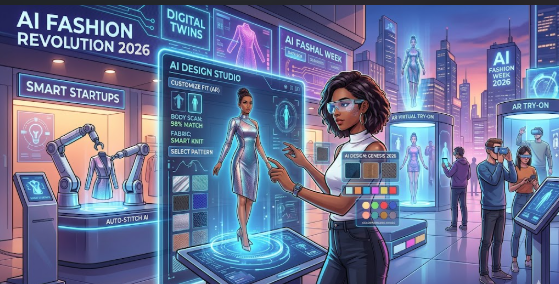
Fashion in 2026 is no longer just about what people wear—it is about how technology understands, predicts, and shapes personal style in real time. The industry has shifted into a powerful fusion of creativity and computation, where artificial intelligence, augmented reality (AR), digital twins, and blockchain systems are driving everything from design to purchase decisions.
What makes this transformation especially significant is its accessibility. Earlier, fashion innovation was limited to large global brands. Today, digital-first tools are empowering independent designers, small fashion startups, and direct-to-consumer (D2C) brands to scale globally without traditional retail barriers.
Fashion has effectively evolved into a data-driven, experience-led, and AI-powered ecosystem.
The modern fashion landscape operates less like a traditional retail industry and more like a real-time digital intelligence system.
Instead of seasonal cycles and static catalogs, brands now rely on:
This means fashion is no longer pushed to consumers—it is generated dynamically based on their preferences, lifestyle, and digital behaviour.
The result is a shift from mass fashion to hyper-personalized fashion ecosystems.
Artificial intelligence has become the backbone of modern fashion operations and consumer experience.
AI is now functioning as both a creative assistant and a commercial strategist, enabling brands to respond instantly to shifting consumer demand.
For fashion startups, this is a major breakthrough—AI reduces dependency on large design, marketing, and analytics teams, allowing lean businesses to operate at scale.
Augmented Reality (AR) has fundamentally changed how consumers shop for fashion online.
Instead of imagining how clothing will look, users can now:
This has significantly improved purchase confidence while reducing product returns across the fashion e-commerce sector.
For startups and D2C brands, AR acts as a virtual fitting room that eliminates the need for physical retail infrastructure.
One of the most advanced developments in 2026 fashion is the emergence of digital twins—virtual representations of real consumers.
These AI-generated profiles are built using:
For designers, this reduces production uncertainty. For consumers, it creates a fully personalized fashion journey that evolves over time.
Perhaps the most disruptive impact of fashion technology is its role in empowering startups and independent designers globally.
Startups can now:
This removes traditional dependency on retail chains and distributors.
Small brands are leveraging AI to:
This allows startups to compete with established fashion houses using data instead of scale.
Short-form video platforms and influencer ecosystems now act as:
Fashion trends now spread through algorithms, not seasonal showcases.
Modern consumers demand full visibility into product origins, and fashion brands are responding through blockchain-based Digital Product Passports (DPPs).
These systems allow users to:
For startups, transparency is becoming a competitive advantage in building trust and long-term loyalty.
In 2026, the separation between online and offline retail no longer exists.
Even small boutiques now function as hybrid digital-physical experience centers.
Fashion marketing has evolved into a continuous, AI-optimized content system.
Brands now use:
Every interaction is now both content and commerce combined.
Technology is also addressing one of fashion’s biggest challenges—sustainability.
Key innovations include:
Sustainability is no longer optional—it is becoming a core operational requirement in modern fashion systems.
Fashion in 2026 is becoming a blend of creativity and technology, where AI, AR, and digital tools are changing how people shop, design, and experience style. It is making fashion more personalized, accessible, and innovative, while also helping startups and designers reach global audiences more easily.